
How fabric and patterns fit together
Fabric choice and pattern orientation both contribute to the panels used in your dress.
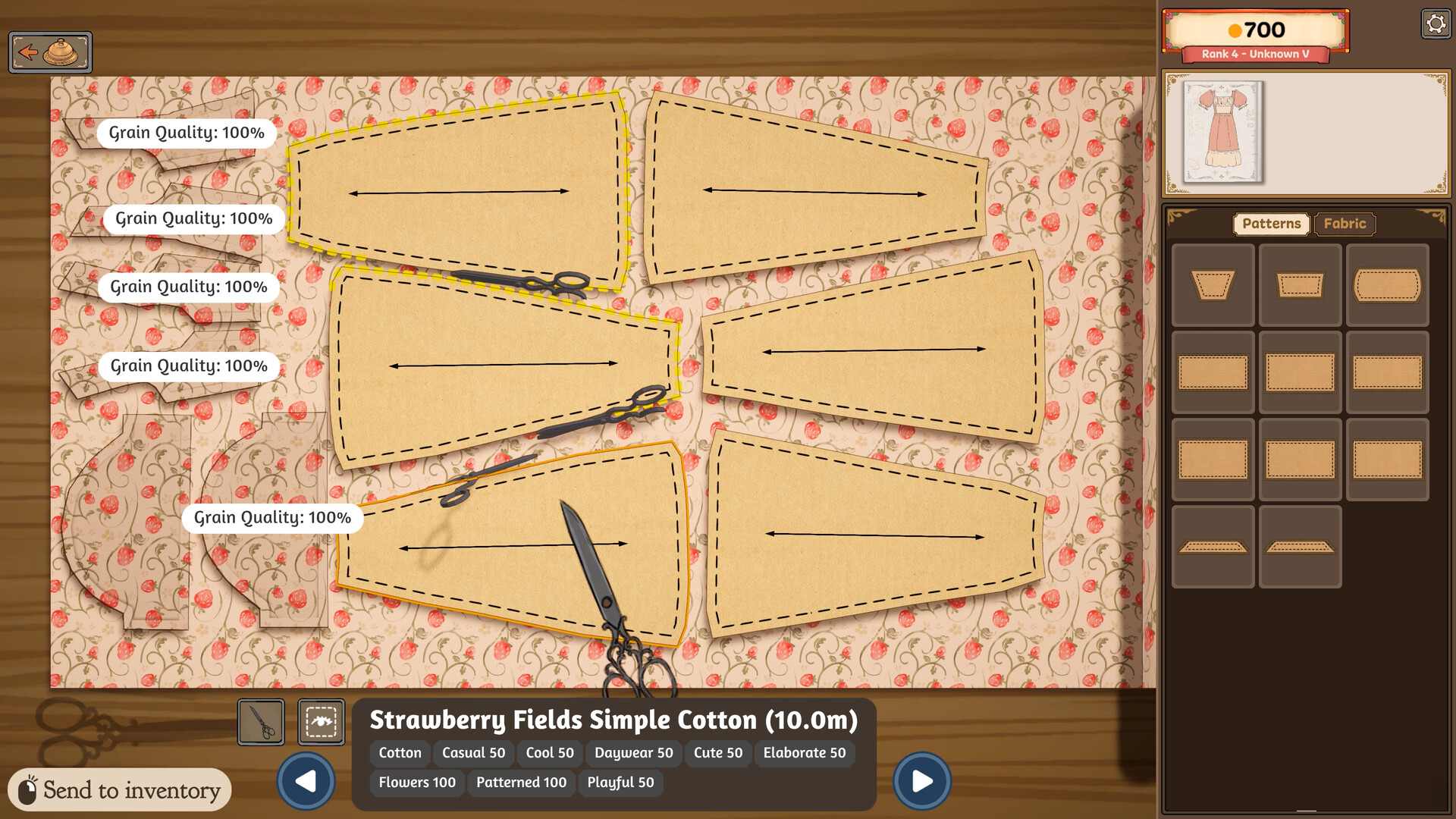
Fabric choice and pattern orientation both contribute to the panels used in your dress.
Start here
Choosing fabric and arranging pattern pieces belong to the same design problem. A colour idea in the sketchbook becomes something more concrete when you select material and decide how to cut it. The official page says grain and bias affect the resulting panels. Keep both choices in mind when comparing your plan with the mannequin preview, while avoiding assumptions about unpublished material statistics.
From an idea to a garment
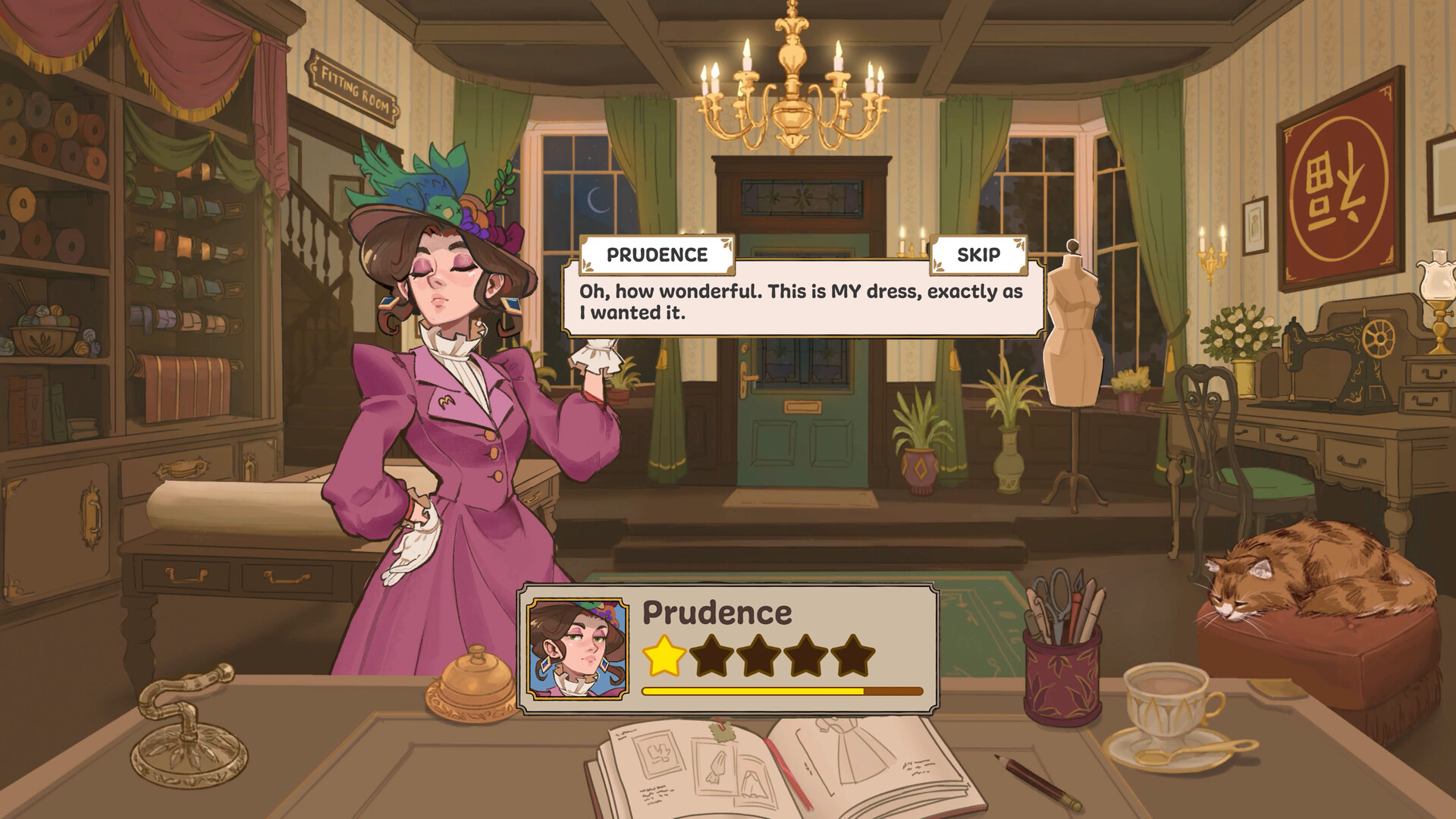
Dressmaker connects several creative stages: selecting fabric, arranging and cutting patterns, previewing on a mannequin, sewing with a machine, and adding decorations. Thinking about those stages together helps you understand why an early visual choice can matter later. The listed fabric options include cotton, linen, wool, silk, and velvet. Decoration includes buttons, bows, appliqué, lace, and accessories with free placement, giving you another way to express the original idea.
Give the design a purpose
Customer preferences and events provide a brief for commissioned work. Your own dresses can also be displayed in the shop window and sold as ready-made creations. Consider which purpose you are designing for before committing to a look. This is an editorial planning approach, not an account of hidden scoring rules. The beginner guide brings these activities together, while the focused fabric and cutting guides discuss individual decisions in more detail.
Continue reading: A beginner’s guide to Dressmaker.
Source: Official Dressmaker Steam page.